Digital Transformation in Maritime Shipping: How Technology is Shaping the Future of Transportation and Logistics
The maritime shipping industry is undergoing rapid development driven by technological advancements and digital transformation, which have become integral components of modern transportation and logistics systems worldwide. As global trade continues to grow and market expectations evolve, shipping companies are increasingly adopting digital solutions to enhance operational efficiency and improve the quality of services delivered to customers.
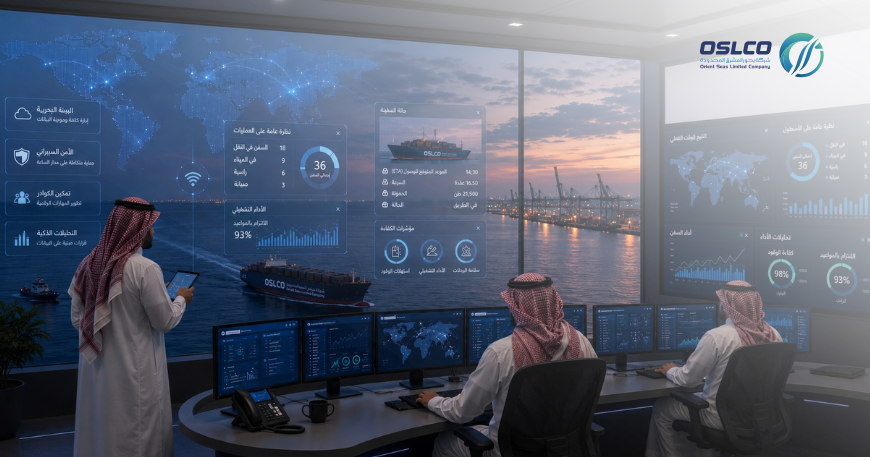
Modern technologies play an important role in advancing maritime operations by facilitating the exchange of information among stakeholders, improving planning and monitoring processes, and supporting data-driven decision-making. Digital systems also contribute to greater accuracy and efficiency by reducing administrative and operational errors, ultimately enhancing service quality and business continuity.
Among the most notable applications of digital transformation in the maritime sector are operational management systems, vessel and cargo tracking technologies, and electronic solutions for document and data exchange. These technologies help improve coordination between shipping companies, ports, and customers while strengthening the overall efficiency of supply chains.
In the Kingdom of Saudi Arabia, the logistics sector continues to receive significant attention as part of the objectives of Saudi Vision 2030, which seeks to strengthen the Kingdom’s position as a global logistics hub connecting international markets. This strategic direction has supported the development of port infrastructure, logistics services, and the adoption of advanced technologies across sectors associated with maritime transportation.
In line with these developments, OSLCO continues to enhance its services and operational capabilities to keep pace with the evolving maritime industry. The company remains committed to delivering reliable maritime transportation solutions that meet the needs of customers and partners while maintaining high standards of quality, efficiency, and operational excellence.
As digital technologies continue to evolve, the maritime shipping industry is expected to achieve further improvements in efficiency, flexibility, and information exchange. These advancements will continue to support international trade and contribute to the resilience and sustainability of regional and global supply chains.