What Happens to Your Vehicle Onboard the Vessel?
Whenever a customer entrusts their vehicle to ocean shipping, one important question naturally comes to mind: What happens to my vehicle after it enters the vessel? More importantly, how is it protected throughout its journey until it reaches its final destination?
The answer lies in a carefully managed logistics process. A vehicle’s journey onboard a vessel is far more than simply transporting it from one port to another. Every stage follows internationally recognized maritime standards and operational procedures designed to ensure the vehicle is handled safely, securely, and professionally from the moment it is received until it is delivered.
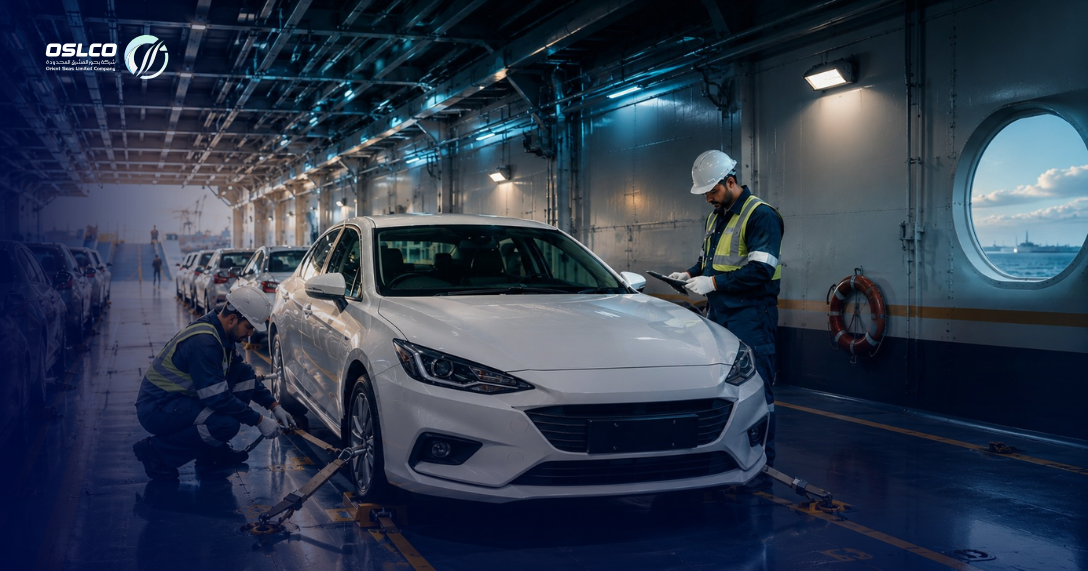
Upon arrival at the port, each vehicle undergoes a detailed inspection and documentation process to verify its condition and ensure that all shipping information accurately matches the transport documents. This creates a reliable record and enables the shipment to be monitored throughout every stage of the voyage.
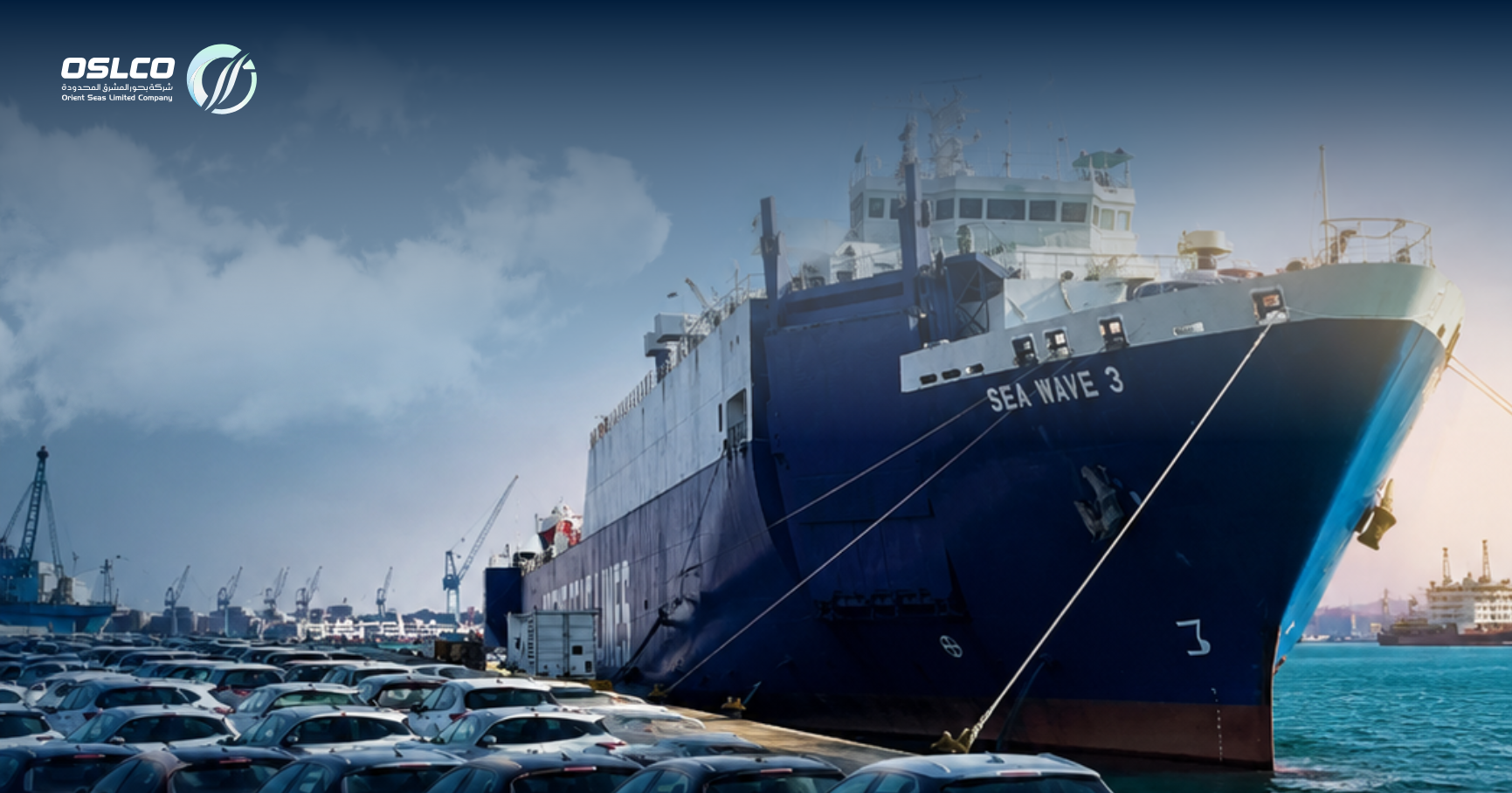
Once all procedures have been completed, the vehicle is driven directly onto the vessel via specially designed ramps used by Roll-on/Roll-off (Ro-Ro) vessels. These purpose-built ships allow vehicles to be loaded and unloaded under their own power, eliminating the need for cranes and significantly reducing cargo handling, contributing to a safer and more efficient shipping process.
Inside the vessel, vehicles are never positioned randomly. Instead, they are arranged according to a carefully engineered loading plan that considers weight distribution, vehicle dimensions, and vessel stability. Each vehicle is professionally secured using specialized lashing equipment designed to prevent movement throughout the voyage, even under challenging sea conditions. Throughout the journey, experienced personnel continuously monitor cargo operations while adhering to strict operational procedures and internationally recognized maritime safety standards, ensuring every shipment remains secure from departure to arrival.
Upon reaching the destination port, the discharge process is carried out in a systematic and organized manner. Vehicles are unloaded according to the operational plan before completing the required port and customs procedures, allowing them to be released efficiently to their owners or authorized representatives.
Today, ocean vehicle transportation is far more than simply moving cargo across international waters. It is a highly coordinated logistics operation built on expertise, precision, meticulous planning, and uncompromising safety standards. Every stage of the process is designed to protect the integrity of each shipment while ensuring efficiency and reliability throughout the supply chain.
At OSLCO, we understand that every vehicle entrusted to us represents far more than cargo—it represents our customers’ trust. That is why every shipment is managed with the highest levels of professionalism, operational excellence, and meticulous attention to detail. From the moment your vehicle is received until it reaches its destination, our commitment is to deliver a shipping experience defined by safety, reliability, and confidence.